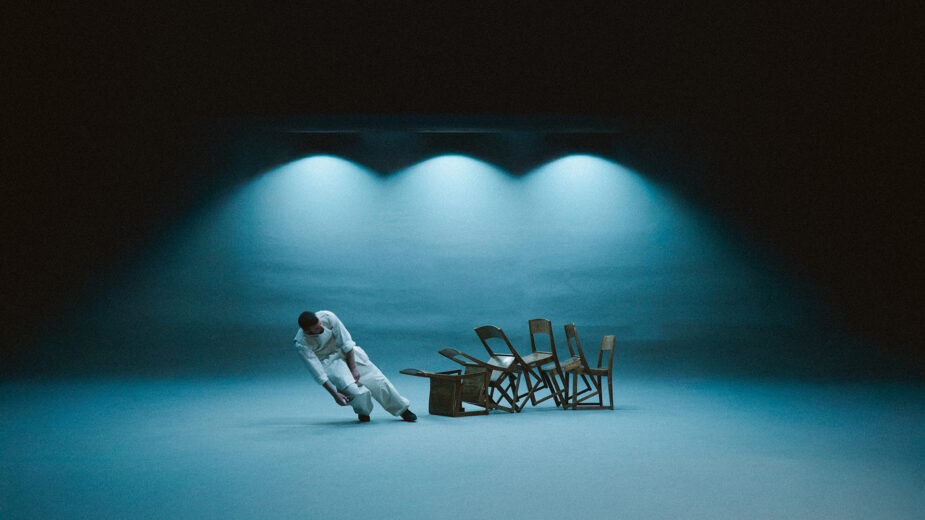
Why are certain things commonly considered magic while others aren’t? It’s a question that visual artist and magician Kalle Nio has often pondered. He sees a lot of similarities between magic and art, and believes that a live performance is completely unlike anything else in today’s world. Kalle Nio’s and Fernando Melo’s new production Tempo will have its premiere in Helsinki in August 2025.
The article was originally published in the Finnish Circus & Dance in Focus magazine in January 2025.
TEXT Emma Vainio TRANSLATION Lola Rogers
What is magic? It’s a question that visual artist and magician Kalle Nio has often pondered. Why are certain things commonly considered magic while others aren’t? “The world is full of amazing things that we can’t explain,” Nio says. “Few people can tell you why an airplane stays aloft or how a refrigerator works. But we don’t think of them as magic. They’re everyday things.”
When Kalle Nio was a little boy, he diligently practiced tricks he learned from a magician’s kit. By the age of 14, he was already a working magician. “I won the Finland Junior Magician’s championship in 1996, and after that I started performing on television. I had so many gigs that I haven’t really had any other job since,” he says.
As a young performer, Nio presented entertaining magic acts at parties, corporate events, and on cruise ships sailing between Finland and Sweden.
“That lane started to feel really narrow. I was an entertainer, and there was no room left for artistry,” he said, opening up about his frustration. “It’s often assumed that magicians are supposed to delight and amaze their audiences. But I was interested in other emotions, too.”
That interest was the impetus for WHS, one of Finland’s first contemporary circus groups, which Nio established with juggler Ville Walo and costume and set designer Anne Jämsä.
Performance arts are the most important art form right now
WHS’s first piece, Odotustila (2003), combined juggling and magic with video projection. The surrealistic, technically demanding piece was a success, and the group ended up touring with it for more than ten years in Europe, Asia, and North and South America.
To date, WHS has performed on theatre and puppet theatre stages, at festivals, and in circuses in over thirty countries. The group also maintains a stage in Helsinki with an ongoing program of visual theater and film.
Kalle Nio’s new multi-disciplinary international co-production Tempo (2025) will combine magic, theater, dance, and puppet theater. The title Tempo is Italian for time, and also refers to rhythmic tempo. “The double meaning of the name is interesting. The heart gives life its rhythm, but it also counts down the span of our lives, like a stopwatch.” Tempo will have its premiere at Helsinki Festival in August of 2025.
The experience of watching a performance is a radical contrast to everything else the modern world has to offer.
After the long corona shutdowns theaters opened again, and Nio realized how much he had missed sitting in an audience. “A live event is completely unlike anything else nowadays,” he thinks. It’s one of the only places where people really have to turn off their phones for two hours, focus on one thing, and be completely silent. “That’s why performance arts are the most important art form right now. The experience of watching a performance is a radical contrast to everything else the modern world has to offer.”
In 2024, Nio worked as a magic consultant for London’s Gandini Juggling troupe. Their piece Heka had its premiere in France in December of 2024. “It plays with the differences between magic and juggling in a fun way,” Nio says. “For instance, a sleight-of-hand trick where balls appear and disappear becomes something very different when six jugglers do it in unison.”
Art and magic have a similar goal of changing the way we see the world
Kalle Nio is not just a magician and director but also a visual artist. He sees a lot of similarities between magic and art. Art at its best can change how we see the world, much as a magic trick or incantation does.
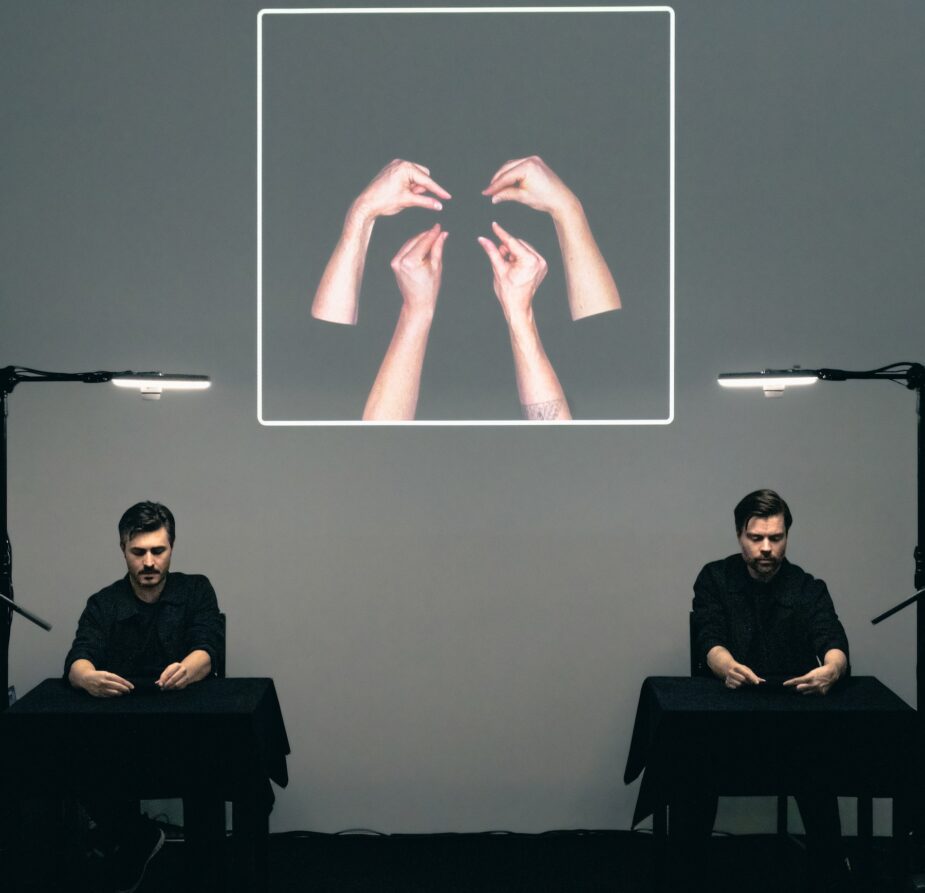
His interest in moving pictures began when he was in middle school, making skateboarding videos. “Skating interested me, but I wasn’t gifted or daring enough for it. Taking videos gave me a good excuse to be with the skaters, and be at the skatepark.”
In the fall of 2023, Nio curated an exhibition at the Sinkka Art Museum located in Kerava, Southern Finland. The show included 18 magicians and visual artists from ten different countries. He assembled mirror illusions, experimental card tricks, and mechanical magic machines, as well as a floating ghost in space, created by Etienne Saglio, one of France’s most renowned contemporary magicians and a member of the “Magie Nouvelle” movement.
Another of Nio’s works, in collaboration with visual artist Leena Nio, was the installation Maalauskone (Painting Machine, 2021), which brought a taste of magic to the Espoo’s EMMA art museum. The work featured a large wooden box that seemed to produce paintings from within, without any visible sign of who was creating them.
What is the meaning of art and creativity in our time? The idea of the painting machine was to consider an artist’s role in a rapidly automating world. “People today have a strong belief that technology can solve every problem and artificial intelligence can even make art. As a comment on this we brought in a machine to magically create oil paintings for the exhibition.”
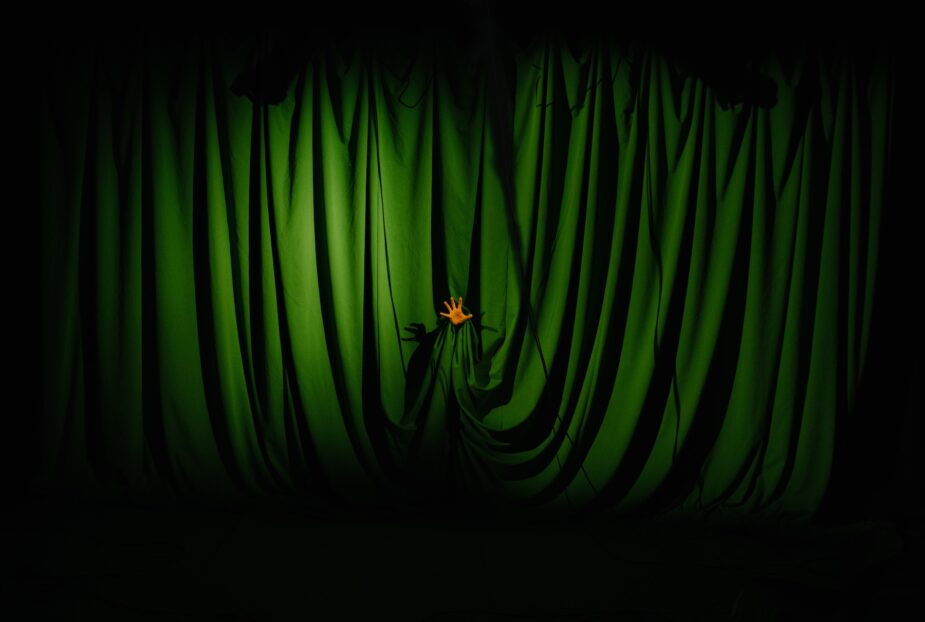
Nio uses the newest video and sound technology in his work, but he also constantly borrows working methods from far back in history. Green (2019), a stylish piece that thoughtfully explored the line between reality and illusion, borrowed many ideas from 19th-century stage magic.
“Magic as an art form is special because it has been so thoroughly documented. You can find even the smallest details of its history in old magic books—things like how a deck of cards was held in the hand, or how to make a person float. There is nearly always a reference to where the trick came from and who was the first to perform it,” Nio says.
“Many of my closest colleagues have been dead for more than 200 years.”