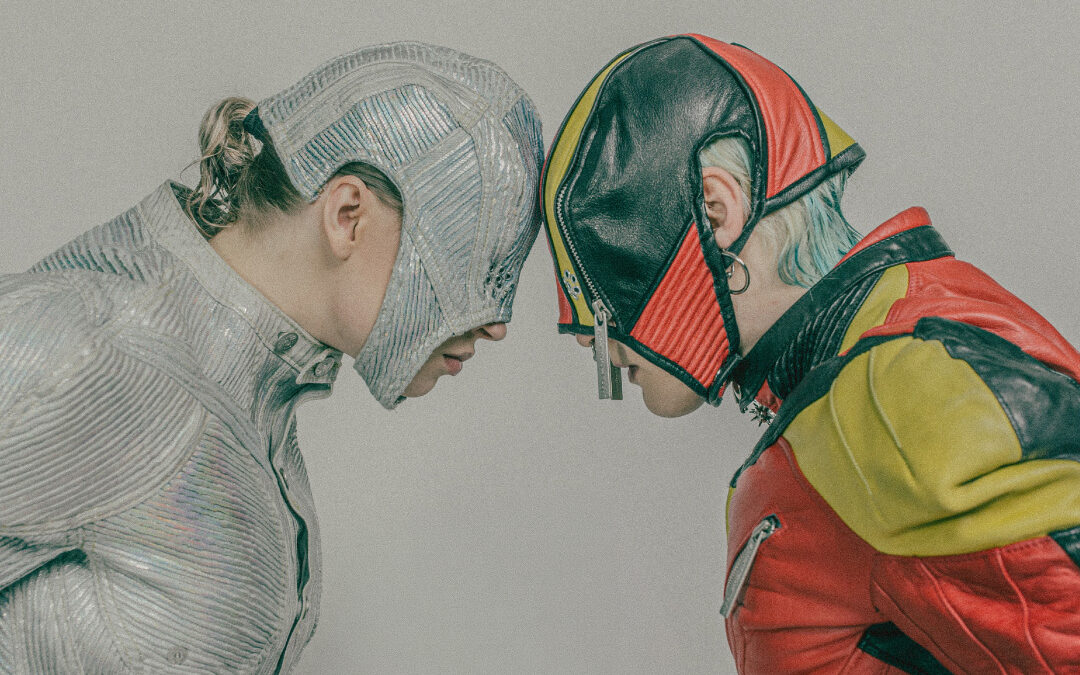
Dance artist Tiia Kasurinen creates unexpected stage worlds shaped by themes of identity, gender, gaze, and internet culture. Premiering in Helsinki in August 2026, her new work Birds of Paradise draws inspiration from birds’ mating dances.
Text: Emma Vainio | This article was originally published in Finnish Circus & Dance in Focus 2026 magazine.
Artist and Choreographer Tiia Kasurinen has a knack for the unexpected. Over the course of her career, she has created her own drag queen character, performed as a female cyborg inspired by over-the-top beauty standards, and taken interesting approaches to exploring our conflict-strewn times, where even the deepest of emotions are processed through the medium of memes.
Themes that interest Kasurinen include identity, gender, gaze and popular culture. The internet in its many forms serves as a key source of inspiration.
In her latest piece, the dance artist turns her focus to birds.
Birds of Paradise, which will premiere in Helsinki in August 2026, was initially inspired by birds’ mating dances. “In particular, the dramatic dances of colourful male birds-of-paradise from Oceania. I saw them in a nature documentary and right away I realised that they could make for really interesting material,” she enthuses.
“It got me thinking that they’re male birds – and very showy ones. There’s something about these colourful birds and their mating dance that is, in a fascinating way, reminiscent of drag queens, and it felt like I was in familiar territory,” she says.
Exploring unrealistic masculinity with flashy outfits
Kasurinen graduated from Stockholm University of the Arts with a degree in dance art in 2017. Her choreography has been performed at the likes of Dance Base in Yokohama, Japan; One Dance festival in Bulgaria; Inkonst in Sweden; and Helsinki Festival and Zodiak – Centre for New Dance in the Finnish Capital.
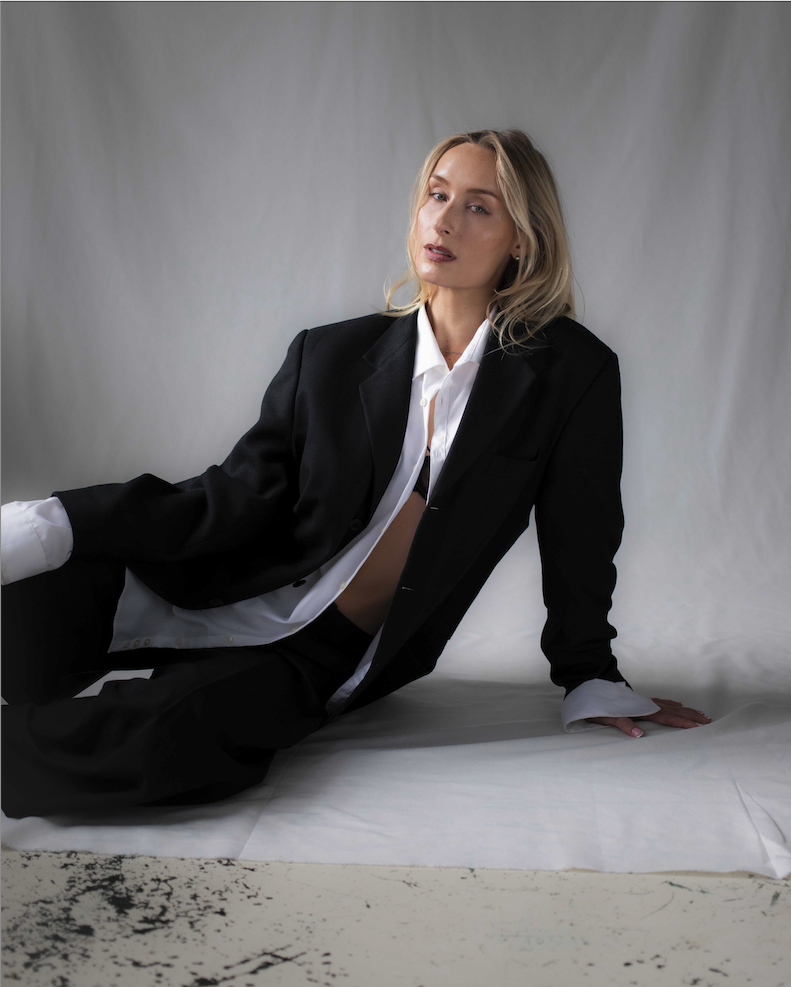
Before long, the visual idea for the first version of BIRDS OF PARADISE was born. Suitable outfits were needed for the pilot of this dance piece inspired by birds-of-paradise, as Kasurinen planned to participate in the prestigious Danse Élargie choreography competition held in Paris. Browsing Instagram, she found Finnish-born and Paris-based Fashion Designer Leevi Ikäheimo’s No Pain, No Glamour collection and could not help but be impressed.
Through visually striking play, the collection explores the ideas about unrealistic masculinity and body image that are served up to boys right from early childhood.
“There is nothing bird-like about the clothes themselves, but they are wonderfully dramatic, super-hero-esque and vividly colourful,” Tiia Kasurinen explains. “I sent the designer a message and managed to borrow the outfits at very short notice for the competition in Paris.”
The artistic ensemble worked, and Kasurinen’s pilot was chosen as a finalist for Danse Élargie – the first Finnish piece in the competition’s history.
What are humans’ mating dances?
Birds of Paradise explores birds, while simultaneously also taking a good look at humans. What are our mating dances like? How is masculinity displayed in birds, and what does it look like in humans?
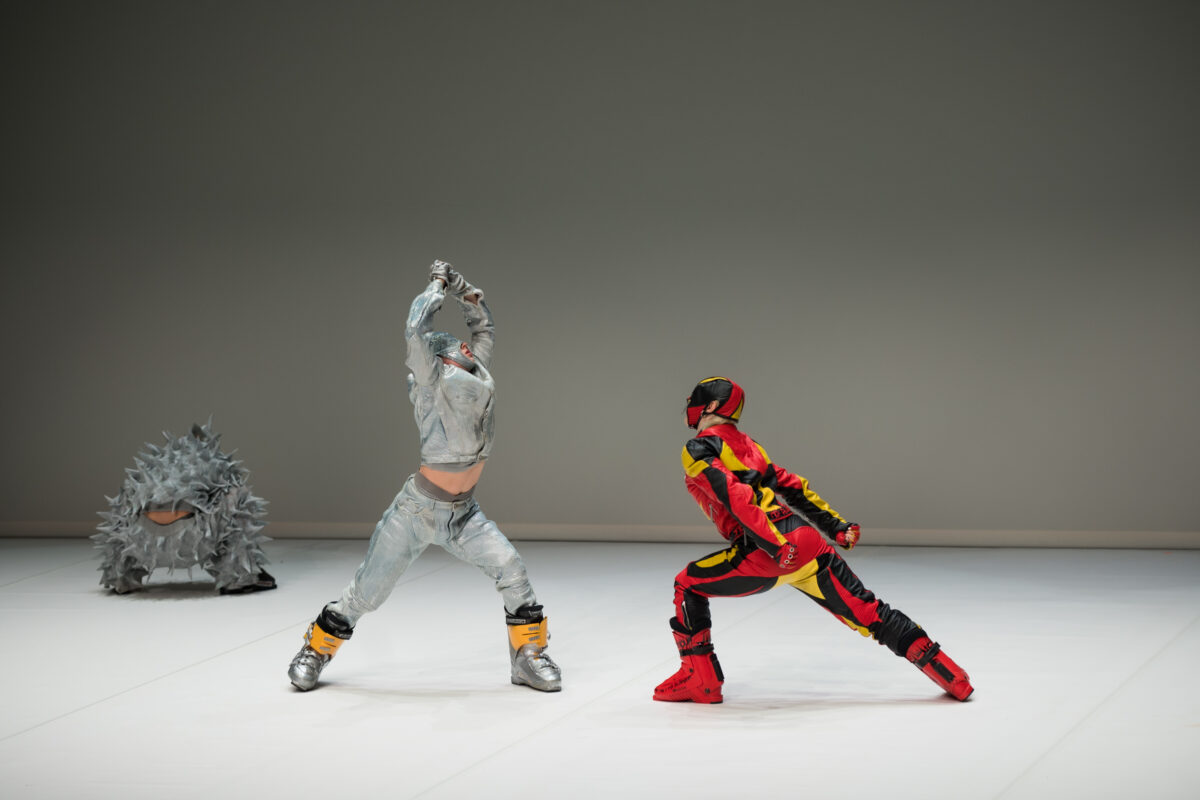
“Through the human gaze, the ways in which male birds attract females to mate sometimes seem quite humorous. But equally, we can look at humans through the same lens,” states Tiia Kasurinen.
“With the working group, I looked at show wrestling, boybands and video games, as well as violent themes and stereotypes of masculinity, with an exploration of sensitivity also thrown into the mix,” she explains.
The choreographer is also fascinated by delving into what mating dances tell us about socially-constructed gender roles, and how movement acquires its gendered nature when dance is produced for the human body.
What should we sound like?
Tiia Kasurinen’s previous piece, Songbird (2025) was also inspired by birds. In the performance, she takes on the role of a feminine character who sings, screams and growls at pitches spanning the whole spectrum of high to low. “The character’s external form is made up of constructed feminine elements. She is reminiscent of Marie Antoinette, clad in a corset, skirt and huge wig – and that in itself is totally drag,” the dance artist elaborates.
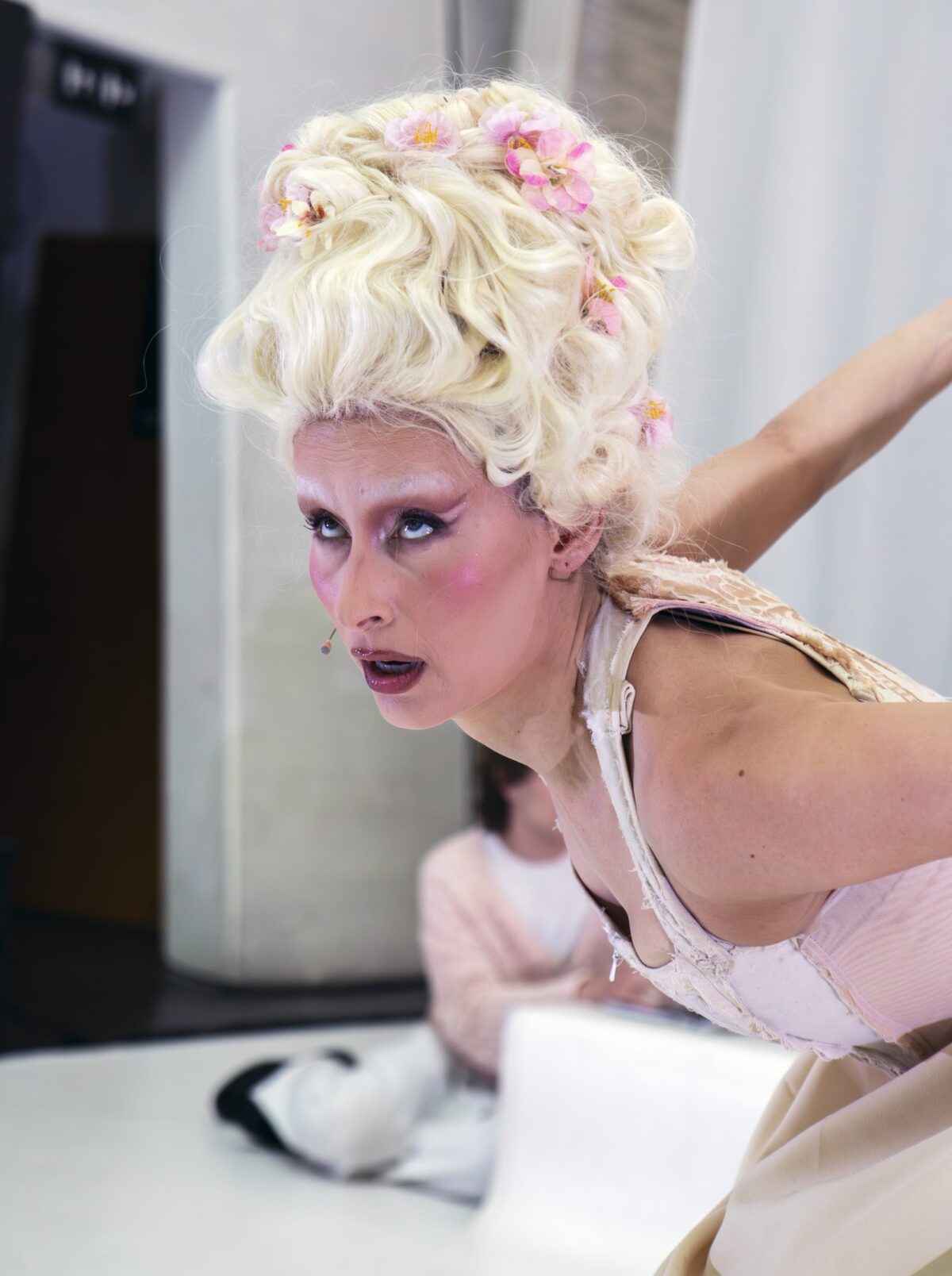
“In the performance, I explore the identity of the voice through techniques such as replicating bird calls. Toying with ideas about how we should sound is fascinating. Can my voice change how I appear to others and what kinds of preconceptions people form?”
The first time Kasurinen used her voice and sang on stage was in 2023, in the piece ONSTAGE – The Concert. The performance drew inspiration from pop stars, club concerts and artists’ alter egos that take shape on stage, with a particular focus on hyperfeminine performer identities and how they harness and feed on the audience’s gaze.
Finding the strength to stand up to scrutiny through disguise
An overriding theme in Kasurinen’s work is visual metamorphosis. She is interested in how the external appearance of the body influences movement, and, at the same time, how the audience relate to different bodies.
The theme of metamorphosis played a major role in her artistic identity right from her student years in Stockholm, when she put on her solo drag queen show Vulva T (2016) as part of her final year project.
What happens when the idealised, Kardashian-esque body we all know from the internet, steps out of the phone screen and into the real world?
In her piece I’m not entirely here (cybersad) (2020), she continued with the theme of metamorphosis. The piece brought to the stage a cyborg-like character created with masking, movement and costumes, with the external appearance inspired by the choreographer’s social media algorithms. What happens when the idealised, Kardashian-esque body we all know from the internet, with cascades of hair extensions, false eyelashes, and dramatic hips, steps out of the phone screen and into the real world? How do the internet and real world meet here?
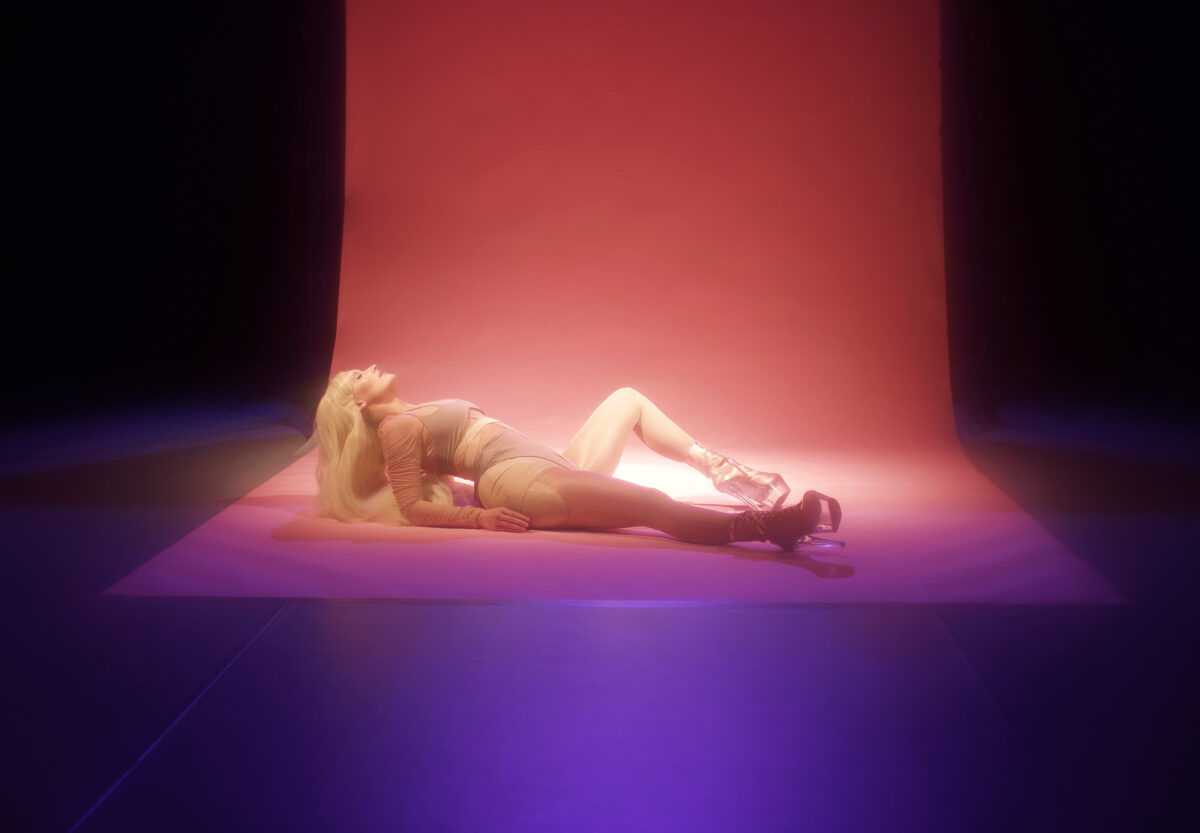
Kasurinen has been intrigued by how much disguise or masking can give us the courage to step into the limelight. “Before, when I performed more as myself, I found being on the stage took a lot out of me. Sometimes I’d feel ashamed if someone commented on how I looked. But when I’m in character, I’m completely exaggerated and masked, it doesn’t bother me being subjected to the gaze of an audience who have no qualms about picking me apart.”
Another theme the artist often comes back to is camp aesthetics and the power of playful exaggeration.
“I’m a very visual person and I often see my work as moving photographs. I like exaggeration, even humorous exaggeration – as a performative device, it’s entertaining,” she says. “And stirring up contradictory feelings is always interesting.”