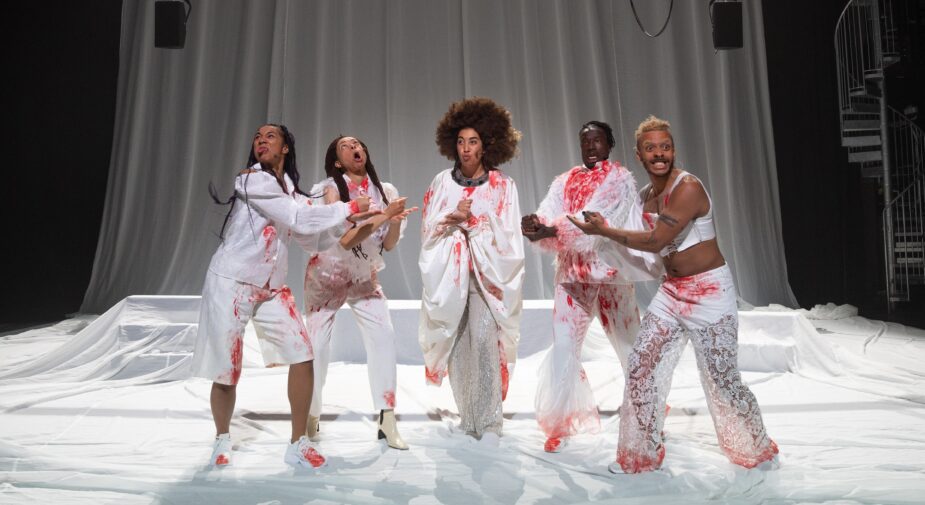
In her quest to shake up the Finnish art scene, time and time again Sonya Lindfors presents audiences with performances that ask difficult questions about what the world might be like without oppression and othering. This autumn she is on tour with her One Drop in Stockholm, Brussels and Hamburg – see dates at the end of the article.
TEXT Alma Onali | TRANSLATION Claire Ruaro
Originally published in Finnish Circus & Dance in Focus magazine 2024
Pinning down choreographer Sonya Lindfors requires a degree of scheduling acrobatics, with autumn traditionally being the busiest time of year in the performing arts.
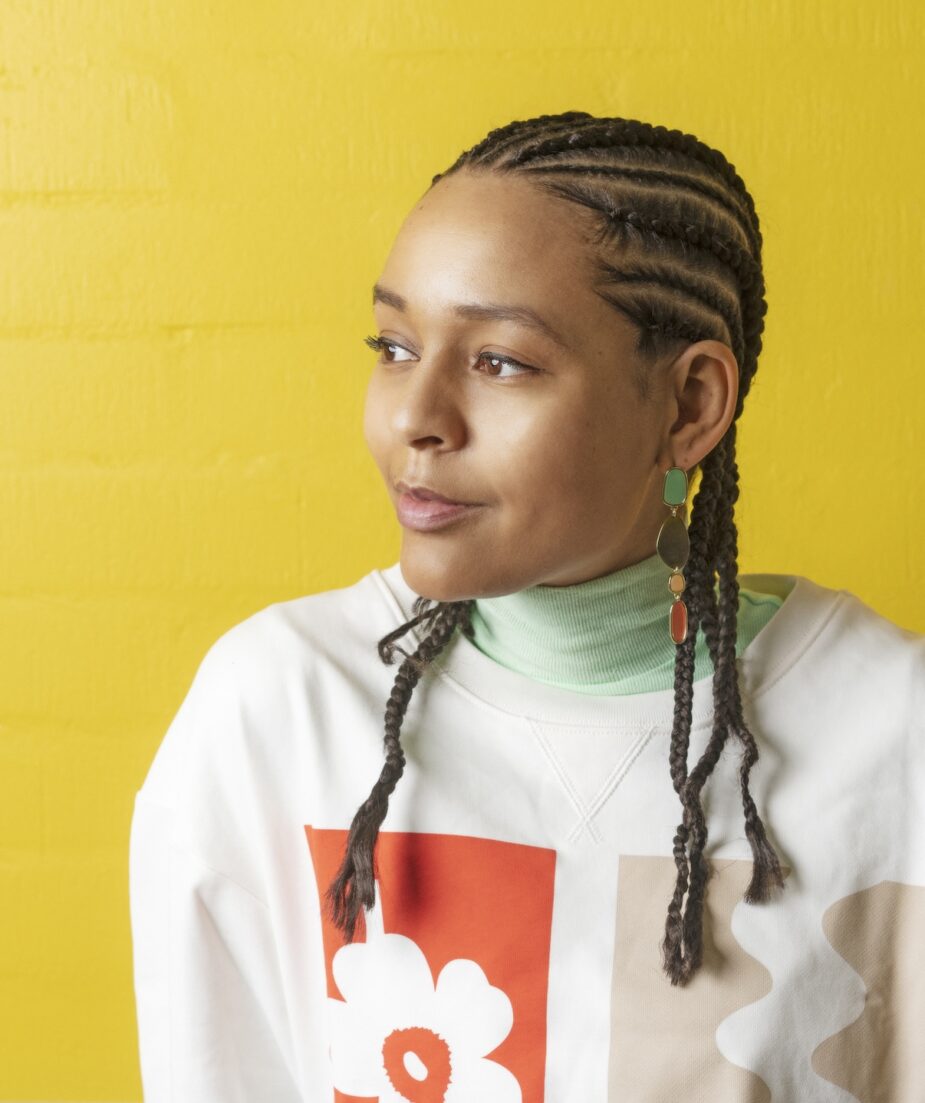
When the day of our interview arrives, however, if you did not know better you might think Lindfors had all the time in the world. To someone not in the know, it might seem that Lindfors has endless time and energy, when in fact her schedule is tightly packed with various different commitments.
“It helps that my work feels meaningful and gives me the opportunity to help people.”
Around the time of our interview, one major demand on Lindfors’s time was that she would shortly be leaving for a European tour with her dance performance One Drop.
However, this is an opportunity she is glad to have had, because taking a piece on tour from Finland – one of the more remote corners of Europe – is not something to be taken for granted. She has noticed on a general level that European dance institutions simply do not have the money they had ten years ago.
Art is a force promoting radical equality and diversity. Obviously, that’s dangerous!
“The Covid-19 pandemic brought about huge budget cuts, and since then, war and inflation have also played their role. Not to mention authoritarian powers gaining ground in various parts of Europe, which has also led to cuts to the arts. For the most part, art is a force promoting radical equality and diversity. Obviously, that’s dangerous!” states Lindfors with more than a hint of sarcasm.
Danger, however, is the 38-year-old’s destination, with radical dreams about a fairer world lying at the very heart of her work. Lindfors graduated with a degree in choreography in 2013, but her work goes far beyond that – forming what she sees as holistic, perhaps 360-degree artistry. In real terms, that means that her schedule combines teaching, lecturing, dancing, guiding, mentoring, organising, facilitating, conveying, combining, writing, discussing …
“Art is my way of forming a relationship with the world.”
Lindfors is a door opener for minorities and new creators whose access to the art scene is not self-evident
One particularly important area for her at the moment is facilitating other artists’ work through the anti-racist and intersectional community UrbanApa, which she founded in 2011 in collaboration with Anniina Jääskeläinen. The community offers the likes of mini residencies for artists, particularly those who belong to a minority group or who do not follow the traditional higher education pathway into the sector.
“Luckily, growing up I had the kind of home that had the funds and opportunities to enjoy the arts, and the idea that art can really change the world was supported. Not everyone has that same opportunity.”
Lindfors emphasises that few Brown and Black people have access to the spaces she operates in. For that reason, she considers it her responsibility to open doors to new creators. As one performer in One Drop states, while clattering down a narrow staircase holding a microphone stand: “Today I feel like a Black artist in a white institution. It is quite tight!”
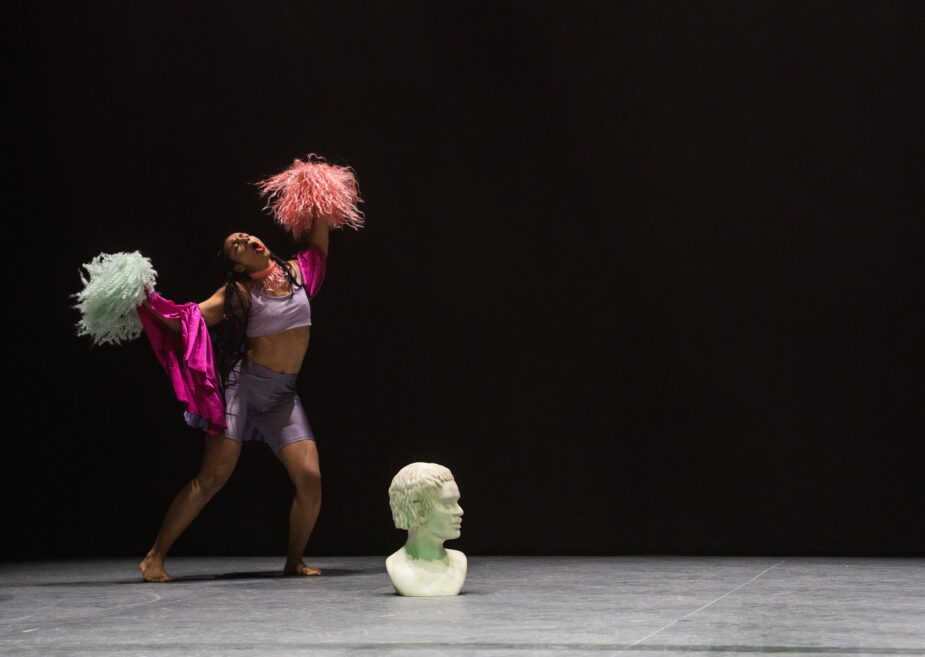
However, Lindfors is also concerned about the future of the arts sector. In her teaching work, she meets youngsters constantly on the brink of burnout, with little faith left in their future.
“How can we have reached the point where we live in one of the world’s richest countries yet everything is so precarious all the time?” Lindfors says with clear frustration.
She believes it stems from a lack of communities, and through UrbanApa, she wants to fight back against this trend.
“UrbanApa is a shared dream and vision of the art institution of the future.”
Lindfors through her work is clearing a path for minorities and challenging power structures, such as the dominance of whiteness. Her pieces often have a deeply rooted theoretical basis, which is then developed in discussions within the working group. Sometimes, Lindfors combines performances with lectures, or when touring, she invites local artists to join the performances as visiting guest stars.
Pieces explore utopian, decolonial speculation on alternative futures
Lindfors stunned Finland’s whiter-than-white art scene with her piece NOIR? in 2013 – the first performance with a fully Afro-Finnish cast. The performance was a success, but at times audiences would laugh during scenes depicting pain points in Black history. It was at this point that Lindfors started to turn her gaze to politics and the histories of bodies even more closely.
With Noble Savage (2016), Lindfors changed tactics. Rather than dealing with personal experiences, she focused on bigger power structures.
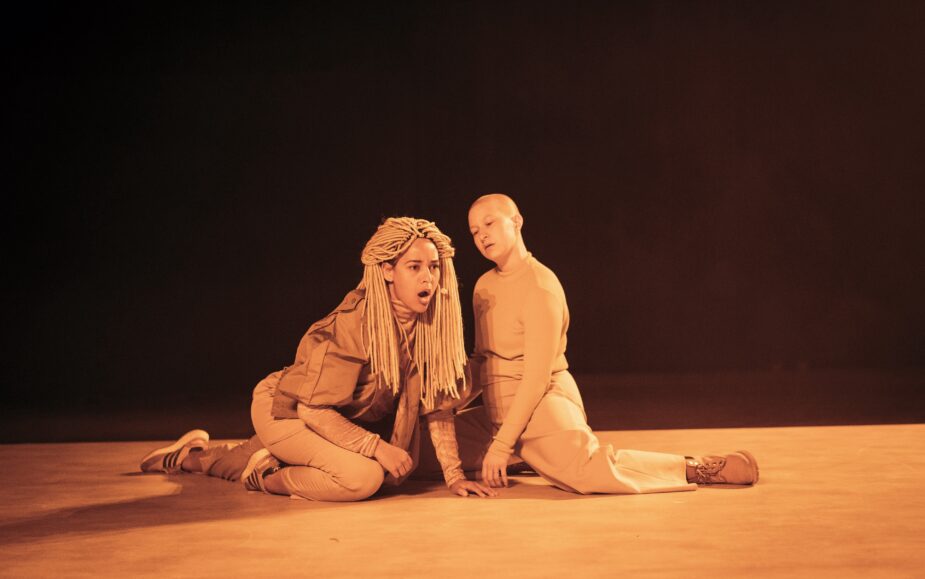
Her subsequent pieces, including Cosmic Latte and camouflage, also dealt with the theme of Blackness and Brownness and the mechanisms of racialisation and othering. At the same time, the pieces explored utopian, decolonial speculation on alternative futures.
The piece she is now touring with, One Drop, continues along the same path, looking at relations and how colonialism and the art world are linked to one another. A particular area of focus has been the 19th century – the golden age of imperialism, classical music and art. Beauty ideals in terms of both individual bodies and more generally in society were closely intertwined with power and oppression. The construction of monumental buildings in Belgium was only possible with blood money from the Congo (now the Democratic Republic of the Congo).
“These are painful things to think about. What would Africa be like now, if there had been no colonialism or oppression? What would South America look like if the Indigenous populations had not been killed off by violence and communicable diseases, both brought by Europeans?”
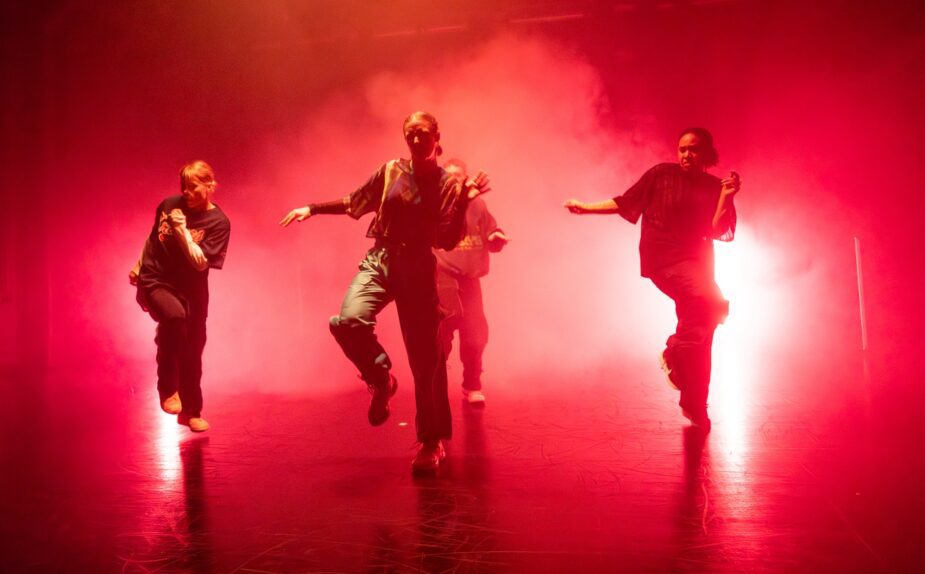
One Drop was not Lindfors’s only new show for 2023 – she also celebrated two other premieres last year. One of these was Common moves, intended for the Helsinki Biennial and created in collaboration with other Helsinki BIPOC artists. The second, Something like this, was a dance piece specifically intended for young people over the age of 12. Lindfors approaches art intended for children with just as much seriousness as any other art, but there are, of course, some differences. The language, rhythm, and length are all adapted to suit children.
While in pieces intended for adults, it is harder for Lindfors to truly reach middle class, white audiences, with children’s performances the issue of how to navigate discomforts takes a back seat.
“In the working group we talked about what we would have liked to see as teenagers. And, on the other hand, what we, as educators and adults, would want children to see?” Lindfors explains.
The performance ended up incorporating lots of playfulness, encouragement, courage and daring. Lindfors considers acceptance of different body types to be another key theme, believing that dance can clear a wider space in the narrow gaps social media creates.
“Dance saved me so many times as a teenager in difficult spots. Could Something like this inspire other young people to get involved in dance?”
Current problems, such as polarisation and the climate crisis, can be linked to a breakdown in various kinds of relationship. This feeling of insignificance arises when we are separated from ourselves, each other and nature
Lindfors was presented with a State Award for Public Information in 2022 for her impressive and responsible distribution of information through multidisciplinary dance projects. The renowned prize has been awarded annually since 1968 for commendable instances of sharing and popularisation of information.
Bodily knowledge, for long, was not recognised as a form of information
“Receiving that award felt radical – it represented taking a stand on whose information and what kind of work are accepted and approved as information,” says Lindfors.
Information is power, she says. For centuries, different forms of information, such as that cultivated by Indigenous populations and bodily knowledge have been excluded from the Western perspective. However, this kind of information could help people and other creatures coexist in a more sustainable and meaningful way.
“Current problems, such as polarisation and the climate crisis, can be linked to a breakdown in various kinds of relationship. This feeling of insignificance arises when we are separated from ourselves, each other and nature,” states Lindfors.
For this reason, instead of individualism, Lindfors always returns to relationships, to dreaming of a better future.
Sonya Lindfors’s One Drop on tour
Stockholm, Dansens Hus – September 12th and 13th
Brussels, Beursschouwbourg – October 18th and 19th
Hamburg, Kampnagel – October 25th and 26th
READ the Finnish Circus & Dance magazine online here